




Strait of Hormuz Risk: What US-Iran Tensions Mean for Oil CFDs

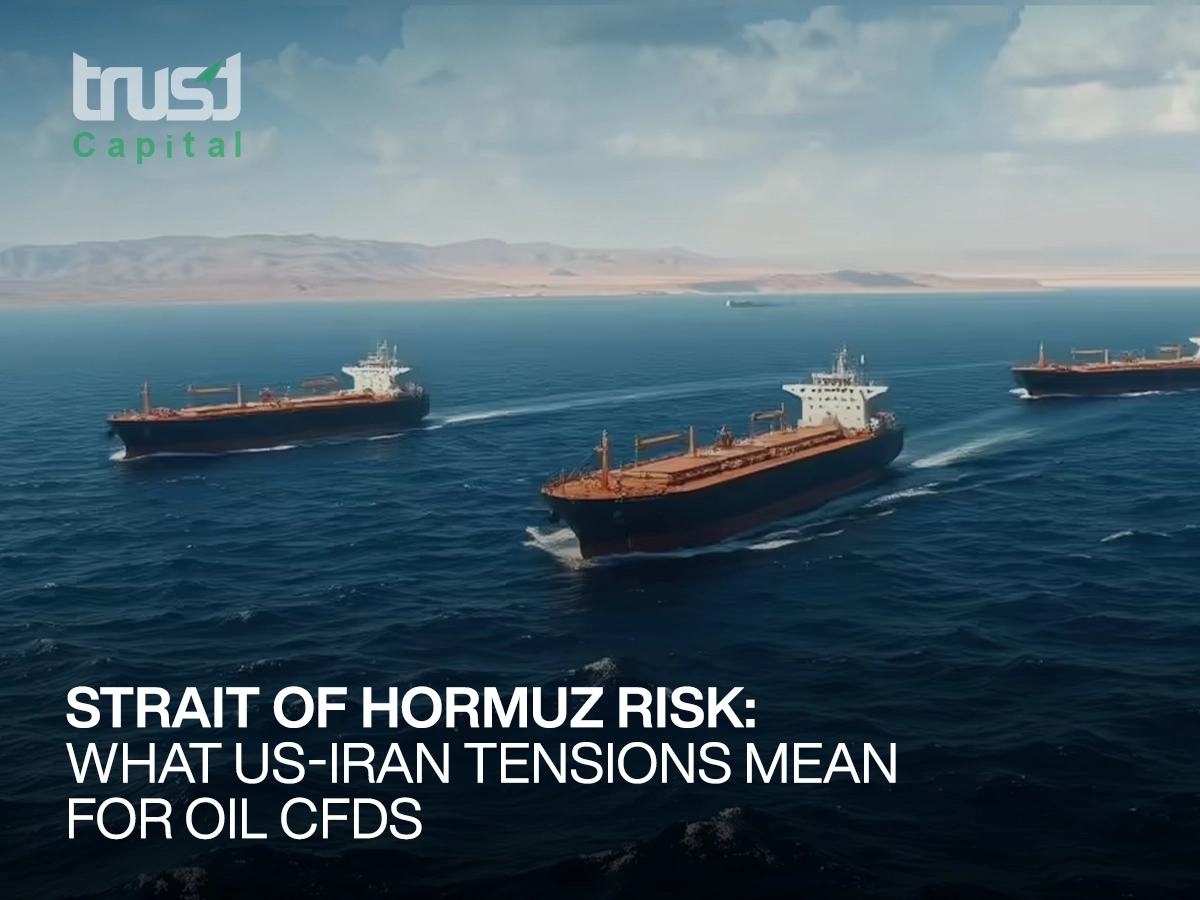
The Strait of Hormuz has dominated oil market news throughout 2026, and for traders in the oil CFD market, it remains the single most important geopolitical variable to watch. As US-Iran tension continues to shape the energy outlook, understanding how this narrow waterway drives oil price risk is essential for anyone involved in oil CFD trading this year.
Why the Strait of Hormuz Matters to Global Oil Trade
Before the 2026 conflict, roughly a quarter of the world's seaborne crude oil trade passed through the Strait of Hormuz — the narrow channel connecting the Persian Gulf to the Gulf of Oman. There is no full alternative route. When Hormuz shipping is disrupted, Middle East oil struggles to reach Asian and global buyers, and the effect on the crude oil price is immediate.
That is exactly what markets witnessed this year. After hostilities began in late February 2026, Iran declared the strait closed, tanker traffic collapsed, and Brent surged to a 52-week high above $126 per barrel — one of the sharpest oil supply risk repricings in modern energy markets.
Where the Oil Market Stands Now
The oil price today tells a very different story. With a ceasefire in place, a memorandum of understanding signed in June, and Hormuz shipping gradually recovering, Brent has retraced to the low $70s — near its lowest levels since the crisis began. Vessel transits have climbed week over week, OPEC+ has approved further production increases, and Saudi Arabia has cut selling prices to Asian buyers, reinforcing a softer oil price trend.
But the situation is far from settled. Iran continues to insist on controlling transit routes and has warned that tankers deviating from its designated corridors face a "forceful response." Incidents involving commercial vessels have continued even after the truce. In other words, the oil market view for the second half of 2026 is defined by an uneasy balance: recovering supply on one side, unresolved US-Iran tension on the other.
What This Means for Oil CFD Trading
For CFD traders, this environment creates a distinctive risk profile — and understanding it matters more than predicting any single headline.
Headline-driven volatility. Global oil news out of the Gulf can move the crude oil trade within minutes. A single attack on a tanker, a failed negotiation round, or a new route dispute can send Brent and WTI CFDs sharply higher, while progress in talks tends to pull prices back down. Oil CFDs 2026 have been defined by this two-way volatility — moves happen fast in both directions.
Gap risk around key events. Because the Hormuz risk 2026 story develops around diplomatic meetings and weekend announcements, prices can gap between sessions. CFD positions held through such events carry elevated oil market risk, which makes position sizing and stop-loss discipline central to risk management.

The premium can deflate as fast as it inflates. Traders who assume geopolitical tension only pushes prices up have been caught out this year. As shipping normalised and supply expectations grew, the crude oil price fell back toward pre-war levels despite ongoing friction. The oil outlook 2026 is a reminder that supply recovery and OPEC+ policy can outweigh headline fear.
Practical Oil Trading Tips for a Hormuz-Driven Market
A few principles help traders navigate energy markets shaped by chokepoint risk. First, follow the shipping data, not just the headlines — weekly transit numbers through the strait have become one of the most reliable gauges of real oil supply 2026 conditions. Second, watch the diplomatic calendar: US-Iran talks, UN resolutions, and route negotiations are scheduled events that concentrate volatility. Third, respect both directions — a durable agreement could extend the current downtrend, while any renewed escalation could reprice Gulf oil 2026 risk within hours. Finally, always define your risk before entering a position; in a market where the energy news 2026 cycle changes overnight, protection matters more than prediction.
The Energy Outlook From Here
The base case in most oil market 2026 analysis is a gradual normalisation: traffic through the strait continues to recover, OPEC+ unwinds production curbs, and prices stay under pressure. But the tail risk has not disappeared. Iran's demand for route control remains unresolved, and estimates suggest full flows through Hormuz may not return until 2027. For anyone trading the oil CFD market, that means the Strait of Hormuz will stay on the watchlist — a source of both risk and opportunity for the rest of the year.


